
Selecting the right fish for a backyard pond plays a major role in long term water quality, fish health, and overall maintenance needs. Pond owners must match fish species to pond size, depth, climate, and filtration capacity.
Visual goals, mosquito control, and ecological balance also influence stocking decisions.
Fish directly affect ammonia levels, oxygen demand, and organic waste buildup. Smaller, hardy species generally produce less waste and tolerate a wider range of water conditions, making them better suited for compact ponds.
Small ponds typically require resilient, low waste fish that remain manageable in size.
Larger ponds can support ornamental species or ecosystem focused fish, provided adequate depth, aeration, and filtration are in place.
Proper planning prevents overcrowding, unstable water chemistry, and unnecessary stress on fish populations.
Key Factors to Consider Before Stocking Fish
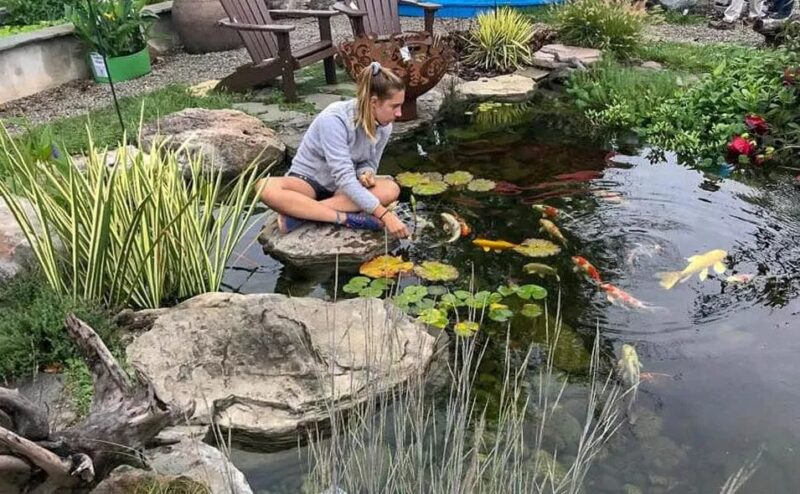
Careful planning determines long term pond stability and fish health. Stocking decisions affect water clarity, oxygen levels, algae growth, and maintenance workload.
Several practical factors must be reviewed before adding any species.
Pond Size and Depth
Pond dimensions directly limit fish size, stocking density, and biological balance.
Volume determines dilution capacity for waste, while depth protects fish during temperature extremes. Large ornamental fish require significantly more water than many new pond owners expect.
Koi need both space and depth to grow safely. Recommended minimum conditions include:
- At least three feet of depth to protect fish during winter and summer temperature swings
- Roughly 1,000 gallons or more for a small group of koi
- Strong mechanical and biological filtration sized for heavy waste production
Insufficient depth increases stress during freezing weather and intense summer heat. Shallow ponds warm quickly and lose oxygen faster, which places large fish at risk.
Small ponds under 500 gallons cannot safely support large, high-waste species. Limited water volume allows toxins to concentrate rapidly.
Koi need both space and depth to grow safely. Recommended minimum conditions include:
- At least three feet of depth to protect fish during winter and summer temperature swings
- Roughly 1,000 gallons or more for a small group of koi
- Strong mechanical and biological filtration sized for heavy waste production
Suitable options for compact ponds include:
- Comet and common goldfish
- Shubunkin
- Rosy red minnows
- Mosquito fish
Overcrowding in small systems quickly leads to ammonia spikes, cloudy water, and oxygen depletion. Conservative stocking protects fish and simplifies maintenance.
Water Temperature and Climate
Seasonal temperature shifts strongly influence fish metabolism and immune response.
Cold-tolerant species adapt well to outdoor ponds in many regions, provided proper winter care is maintained.
Species capable of surviving winter in cold climates include:
- Koi
- Goldfish varieties
- Rosy red minnows
Winter survival depends on continuous oxygen exchange. Ice should never seal the entire surface.
Aeration systems, air stones, or pond deicers maintain an opening for gas exchange and prevent toxic gas buildup under ice.
Warm climates extend feeding seasons and increase growth rates. Higher temperatures also accelerate waste production and bacterial activity.
Water above optimal ranges reduces oxygen availability, which can stress fish.
Routine temperature monitoring helps prevent sudden losses during heat waves.
Filtration and Waste Load
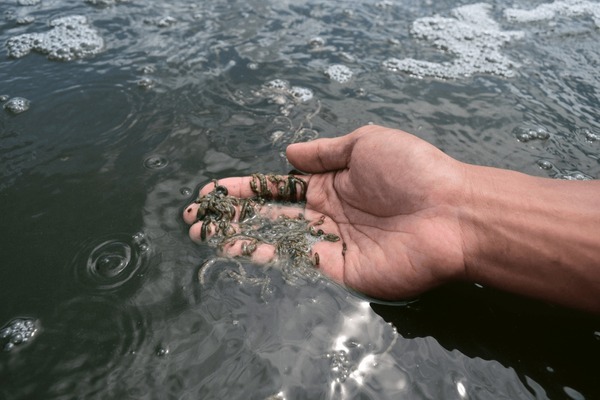
Fish release waste continuously through respiration and digestion. Uneaten food and decaying plant matter add to the organic load.
Ammonia forms quickly in closed systems and becomes toxic at relatively low concentrations.
Effective filtration includes two essential components:
- Mechanical filtration to remove solid debris
- Biological filtration to convert ammonia into nitrite and then nitrate
Larger fish such as koi generate far more waste than small schooling species. Filtration systems must be sized according to expected adult fish size, not juvenile size at purchase.
Undersized systems result in persistent water quality problems.
Poor filtration commonly leads to:
- Cloudy or green water
- Excessive algae growth
- Elevated ammonia and nitrite levels
- Reduced oxygen concentration
In cases where water quality has significantly declined, professional pond restoration may be necessary to restore biological balance and improve long-term pond health.
Strong aeration supports beneficial bacteria colonies and ensures fish receive adequate dissolved oxygen.
Consistent maintenance of filters and pumps keeps biological cycles stable.
Compatibility and Behavior
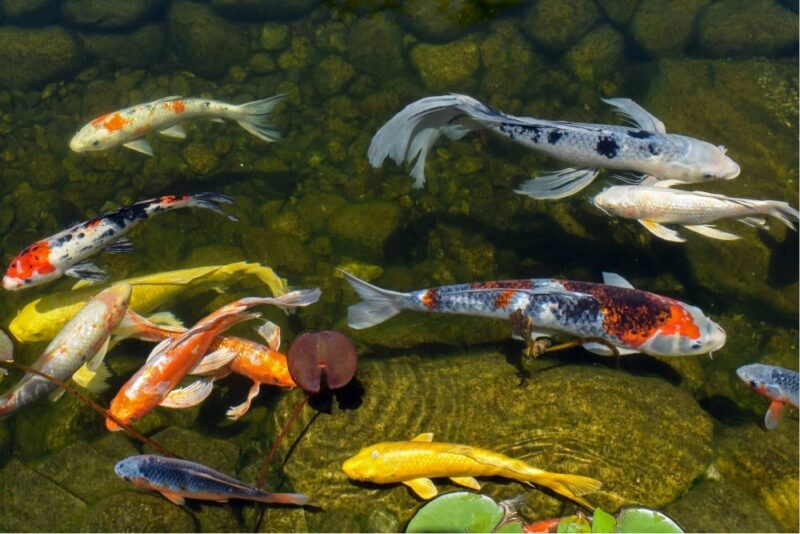
Behavioral traits influence long-term success in mixed-species ponds.
Aggression, territorial tendencies, and feeding competition can create chronic stress if species are poorly matched.
Peaceful fish with similar feeding habits coexist more successfully. Koi and long-bodied goldfish generally share space well in properly sized ponds.
Problems arise when very small fish are placed with much larger species that may treat them as prey.
Situations to avoid include:
- Small minnows housed with large adult koi in limited space
- Territorial sunfish introduced into decorative garden ponds
- Overstocked environments that increase competition for food and oxygen
Balanced stocking reduces stress and promotes consistent growth across all species.
Local Regulations
Legal and environmental considerations must be reviewed before adding fish to outdoor ponds.
Certain states restrict sale or release of non native species due to ecological risk.
Mosquito fish and some sunfish species may require permits in specific areas.
Releasing pond fish into natural waterways can damage native ecosystems and violate wildlife laws.
Reviewing local regulations prevents fines and protects surrounding habitats.
Top Fish Species for Backyard Ponds
Careful species selection supports both visual interest and ecological balance. Each fish type brings specific care requirements and growth expectations.
Matching species to pond conditions prevents long term complications.
Koi
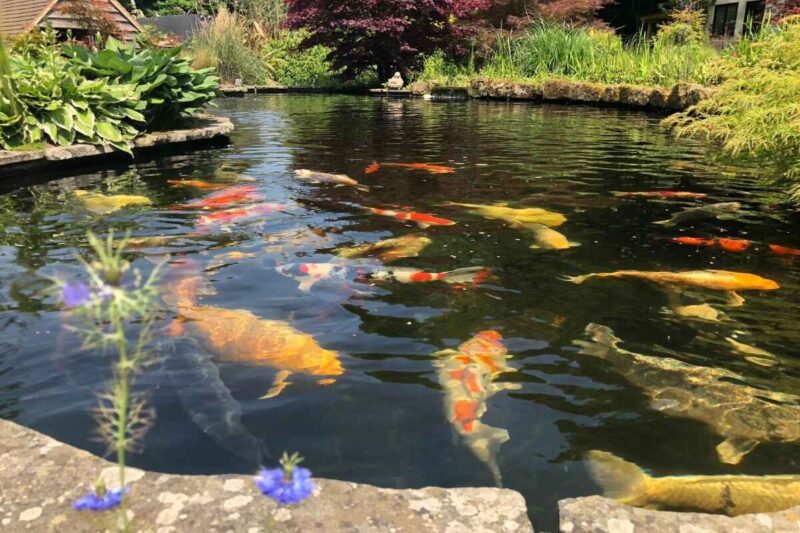
Koi remain one of the most recognized ornamental pond fish due to bold coloration and impressive size. Adult koi can reach two to three feet in length under proper conditions and often live for decades.
Long lifespan and large adult size require serious commitment. Suitable environments must include:
- Minimum pond volume of about 1,000 gallons for a small group
- Depth of at least three feet
- High capacity biological filtration and strong aeration
Cold tolerance allows koi to survive winter when oxygenation is maintained. Deeper water zones provide thermal stability during freezing conditions.
Rapid growth during warm months increases feeding demand and waste output, which reinforces the need for strong filtration.
Goldfish
Goldfish offer a practical alternative for small and medium ponds. Hardy nature and adaptability make them suitable for beginners.
Most outdoor varieties grow between eight and twelve inches, depending on genetics and available space.
Long-bodied types such as comet and common goldfish perform best in outdoor ponds due to their stronger swimming ability and greater resilience.
Compared to koi, goldfish produce moderate waste and require less overall space.
Reliable performance in variable conditions makes goldfish a common choice for ornamental ponds that do not meet koi size requirements.
Shubunkin
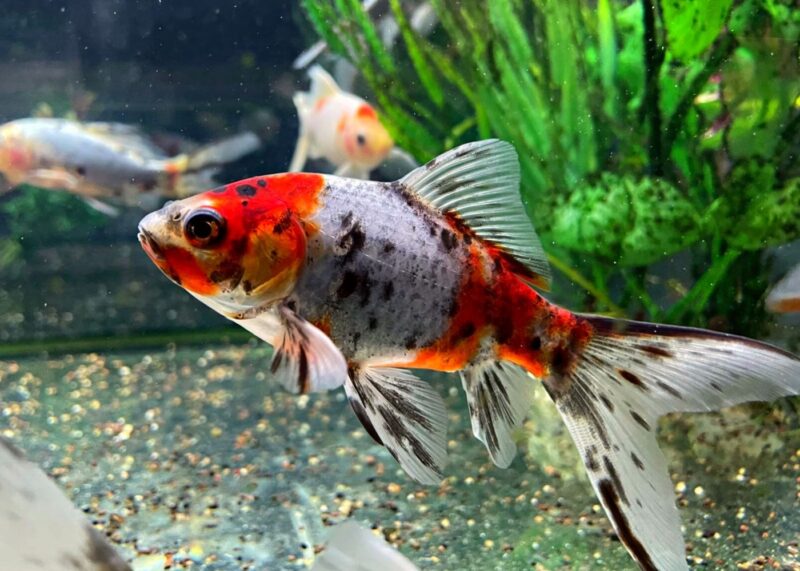
Shubunkin are single tailed goldfish known for calico coloration and active swimming behavior.
Strong tolerance to temperature fluctuations supports year-round outdoor housing in many climates.
Peaceful temperament allows them to mix well with:
- Comet goldfish
- Common goldfish
- Other non aggressive pond fish
Consistent activity and manageable adult size make shubunkin a solid option for decorative ponds with moderate volume.
Functional and Ecosystem Supporting Fish
Certain species contribute more to ecological balance than visual impact. These fish support pest control and nutrient cycling in natural-style ponds.
Rosy Red Minnows
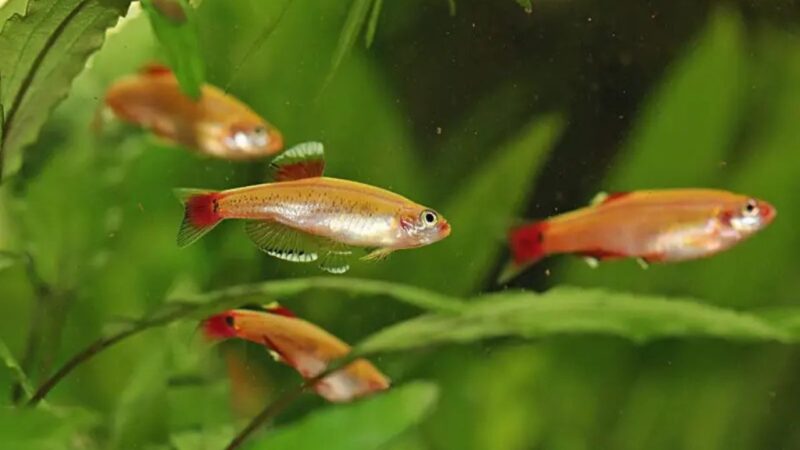
Rosy red minnows, also called fathead minnows, grow to approximately three inches in length.
Small size limits waste production and reduces strain on filtration systems.
Schooling behavior encourages group stocking, which improves security and activity levels.
In lightly stocked ponds, these minnows assist in maintaining ecological balance by consuming small invertebrates and leftover food particles.
Mosquito Fish
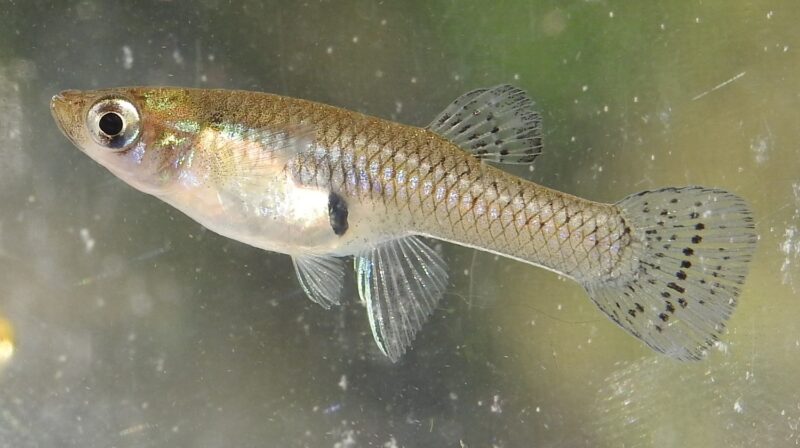
Mosquito fish serve a practical role in controlling mosquito larvae populations.
Shallow ponds and wildlife water features benefit most from their feeding behavior.
Rapid reproduction under favorable conditions sustains population levels.
Monitoring is necessary in confined ponds to prevent overcrowding. Balanced numbers support pest control without overwhelming filtration capacity.
Bluegill and Sunfish
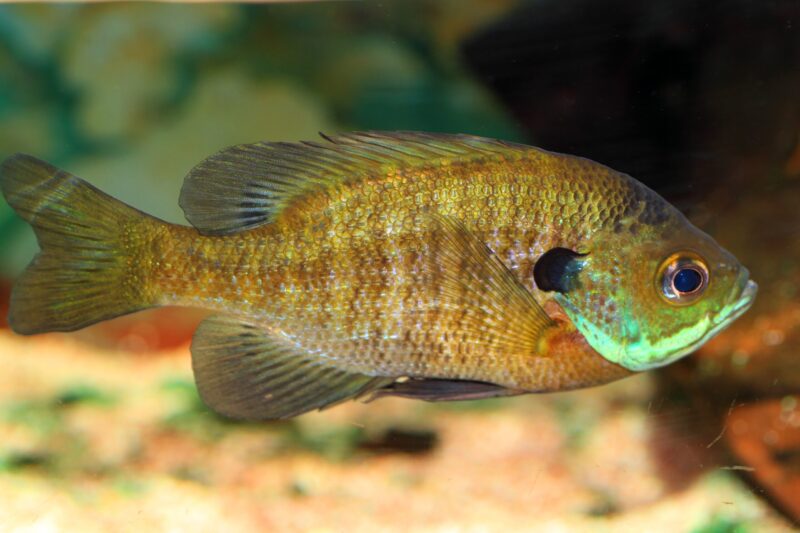
Bluegill and related sunfish species suit large rural ponds with open water and natural shoreline structure.
Territorial instincts and occasional aggression require adequate space.
Conditions appropriate for bluegill include:
- Large surface area
- Sufficient depth
- Minimal ornamental constraints
Small decorative backyard ponds rarely provide enough room to manage territorial disputes. Proper space reduces conflict and supports healthier growth.
Fish Selection by Pond Type
Stocking decisions must align with pond size, depth, and intended function. Different pond categories require different species combinations to remain stable.
Small Backyard Ponds Under 500 Gallons
Limited volume demands careful species selection and conservative stocking density. Fish must remain moderate in size and waste production.
Practical options include:
- Comet goldfish
- Shubunkin
- Rosy red minnows
- Mosquito fish
Large koi should be avoided due to rapid growth and heavy waste output. Reliable aeration and routine water testing protect water quality in compact systems.
Medium and Large Ponds
Greater depth and water volume increase flexibility in species selection. Koi can thrive in larger ponds when filtration and aeration systems are properly sized.
Suitable combinations may include koi, goldfish varieties, and schooling minnows. Oxygen levels must remain stable during summer heat and winter ice formation. Even large ponds can suffer water quality issues if overstocked.
Wildlife or Functional Ponds
Wildlife oriented ponds prioritize ecological balance and pest management. Mosquito fish provide consistent larvae control in shallow zones.
Native sunfish may be introduced in regions where regulations permit their use. Stocking plans should support natural feeding patterns and avoid excessive population growth. Balanced fish communities promote stable water conditions and reduced insect problems.
The Bottom Line
Successful pond stocking begins with matching fish species to pond size, depth, climate, and filtration capacity. Ornamental goals and ecological function must be considered together to maintain stable water conditions.
Careful planning prevents overcrowding, poor water quality, and chronic stress in fish populations. Healthy ponds depend on responsible species selection and ongoing maintenance practices.