

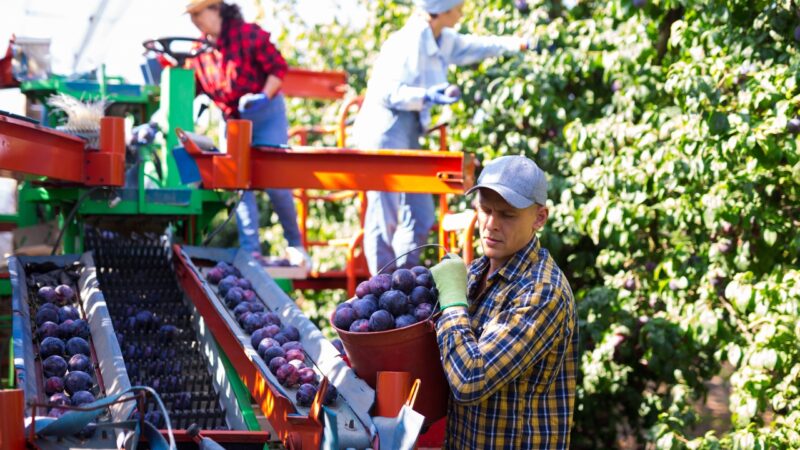
Orchard machinery in 2026 is moving past raw horsepower toward connected, precise, multi-task equipment.
Growers want machines that cut cleaner, work faster, and reduce crew risk.
Cleaner cuts now depend on mechanical pruning, hedging, orchard vision systems, and crop-load data.
Faster work depends on autonomous tractors, smart sprayers, telematics, and platforms that handle several jobs in one pass.
Safer operations depend on less ladder work, better cab design, remote oversight, fewer repetitive tasks, and predictive maintenance.
Why Orchard Machinery Matters More in 2026
Orchard machinery in 2026 is moving past raw horsepower toward connected, precise, multi-task equipment. Growers want machines that cut cleaner, work faster, and reduce crew risk.
Cleaner cuts now depend on mechanical pruning, hedging, orchard vision systems, and crop-load data.
Faster work depends on autonomous tractors, smart sprayers, telematics, and platforms that handle several jobs in one pass.
Okanagan Specialty Fruits shows how orchard technology already works at a commercial scale.
Reported results included about USD 2,000 per acre in annual cost savings, including harvest expenses, plus 25% to 40% average improvement in fruit quality and yields while maintaining target fruit size profiles.
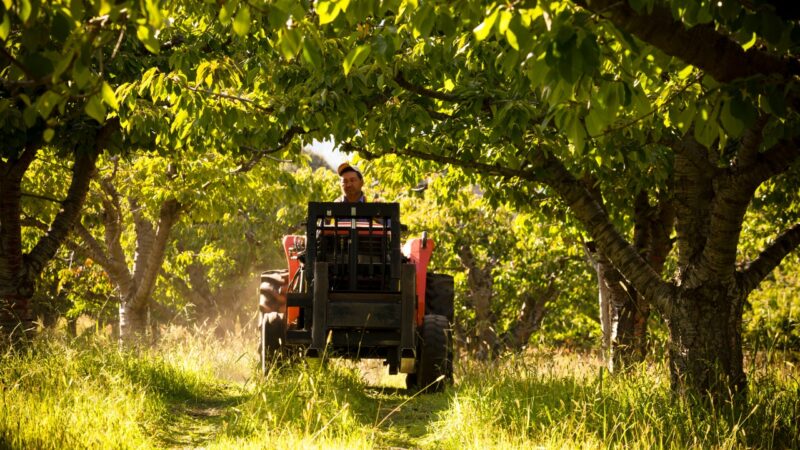
Orchard tractors are built for narrow rows, low clearance, branch contact, and tight turning. Typical features include a width often below 1.5 meters, a lowered center of gravity, branch-deflecting cab or ROPS designs, and diesel, gasoline, or emerging electric propulsion.
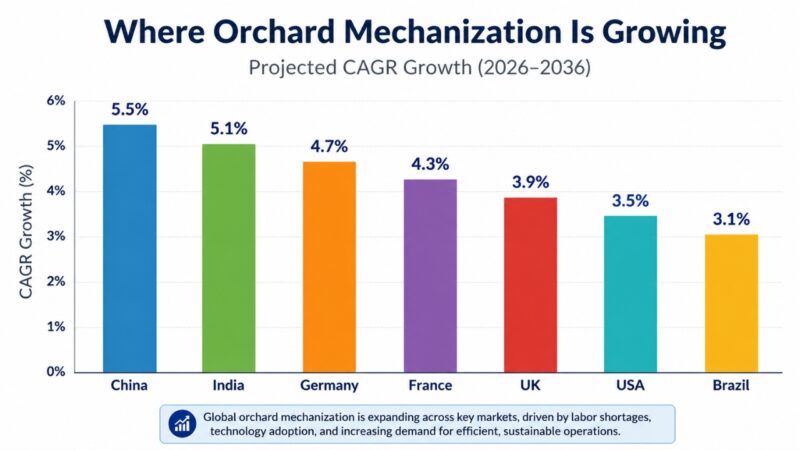
Growers use these machines for spraying, mowing, harvesting support, hauling, and inter-row cultivation. High-density orchards need compact equipment that can move between trees without damaging fruit, branches, trunks, irrigation, or trellis systems. Market segmentation points to demand for compact power. Tractors in the 20 to 30 HP category are projected to lead with a 36.2% share in 2026 due to narrow-path fit, maneuverability, affordability, and lower soil compaction. Fruit orchards lead applications with a 42.5% share. Diesel propulsion leads with a 57.8% market share due to power output, durability, fuel efficiency, and continuous operation under high-load orchard conditions. Demand is strongest where compact machines can replace several manual tasks: Main demand factors include permanent crop acreage expansion, fruit and vineyard labor shortages, compact mechanization by small and medium growers, subsidies, sustainability incentives, and machinery that lets fewer operators complete more jobs. Safety is now a major reason to mechanize orchard work. Mechanical pruning reduces ladder and lopper work. Data-guided thinning reduces repetitive manual labor. Remote oversight limits fatigue exposure. Predictive maintenance helps prevent breakdowns during critical windows. Okanagan’s cost data also points to safety gains. Pruning costs fell to USD 117 per acre after moving more work to hedgers and mobile platforms. A pruning machine can add another layer of labor savings by replacing parts of ladder-and-lopper work with faster, tractor-supported canopy management. Hand thinning costs dropped to USD 86 per acre. Both changes reduced high-risk and repetitive manual work. Telematics helps managers track idle time, fuel use, engine hours, GPS route history, and machine performance in one dashboard. Predictive maintenance analyzes use patterns and flags parts approaching failure before breakdowns occur. In orchards, avoiding downtime during bloom, thinning, spray windows, or harvest support can protect yield and labor plans. Machine design also supports safety. Orchard tractors use lowered centers of gravity, tight turning radius, optimized weight distribution, and branch-deflecting cab or ROPS designs. Cleaner cuts in 2026 mean better canopy decisions, not just smoother pruning wounds. Timing, spur counts, tree stress, variety response, and canopy maps now shape pruning and thinning programs. Okanagan used Orchard Vision Systems by Vivid Machines and Green Atlas. Sensors were first mounted on ATVs, with plans to bolt them onto autonomous tractors so data could be collected during routine passes. Real-time tree scans were downloaded and mapped to guide pruning and chemical thinning. Crop-load data changed block decisions through specific spur-count readings: Mechanical pruning also cuts costs. Okanagan used mobile heading and hedging platforms with tractor-mounted hedgers. Hand thinning costs dropped to USD 86 per acre in 2025 after USD 1,250 to USD 1,500 per acre in 2024. Pruning costs fell to USD 117 per acre with hedgers and platforms. Cost changes show how canopy tools altered labor needs: Hedging does not always leave a perfectly smooth cut. Rougher cuts can trigger hormone response and encourage interior branches to spur up. Okanagan planned to test hedging right after millimeter sprays to see if added tree stress could increase interior spur development. Goldens and Galas responded so strongly to hedging that Carter questioned if bottom-tree pruning would be needed in those blocks. Best results came through measured canopy intervention, not cut smoothness alone. Semi-autonomous tractors are already practical orchard tools. Fully driverless farms are still in progress, but semi-autonomous machines now combine GPS auto-steering, boundary sensors, obstacle detection, and remote monitoring. Current benefits include less field overlap, fuel savings, lower soil impact, 24-hour operation during critical windows, precise boundary control, remote supervision by phone or tablet, and automatic input adjustment through Variable Rate Technology. Okanagan started with three 46 HP autonomous Bobcat tractors used only for mowing. Later, it moved to five 112 HP Kubota tractors capable of foliar spraying, herbicide application, mowing, gopher baiting, and variable-rate fertility applications. Operational gains were measured in hours, downtime, and acres covered: A 4 to 8-acre daily gain per tractor matters across more than 1,200 acres. Better daily coverage helps protect spray timing, thinning windows, labor budgets, and block scheduling. Smart spraying improved input control. Okanagan added two John Deere SmartApply LIDAR-based see-and-spray systems and planned to add a Turbo-Mist Orchard IQ smart sprayer control system. Canopy maps tell the sprayer where trees need application and where product can be skipped. Reported chemical savings ranged between 10% and 55%, depending on season timing and block quality. John Deere also introduced its autonomous 5ML orchard tractor for air-blast spraying at CES 2025. It uses a second-generation autonomy kit with LiDAR and multiple cameras for labor-intensive, high-value crop farming. Orchard tractors are becoming field data hubs. AI-enabled tractors use onboard computing, sensors, and cloud connectivity to analyze field data and provide operator recommendations. Core capabilities include crop advisory dashboards, live engine health monitoring, fuel-efficiency reports with route-level analysis, usage-based service reminders, and cloud-based performance history available by mobile phone. Variable Rate Technology uses GPS mapping and sensors to adjust fertilizer, pesticide, irrigation, or other inputs by zone. In orchards, that means variable-rate fertility, canopy-based spray adjustment, block-specific thinning, sensor-informed irrigation, and crop-load decisions based on fruit spur counts. Okanagan used vision data to guide thinning intensity. Some blocks received one thinning pass. Some received a half-rate spray. Others received a more aggressive program. The goal was to balance vegetative growth with fruiting potential for each tree. Electric tractors are gaining use in orchard farming, dairy operations, greenhouse management, and light utility tasks. Orchard work fits electric machines well when routes are predictable, duty cycles are manageable, and lower noise or emissions matter. Benefits include quieter operation, fewer moving parts, lower upkeep, lower energy costs through grid or solar charging, zero tailpipe emissions, and less direct diesel exhaust exposure in sensitive growing areas. Battery-powered electric orchard tractors can reduce noise, vibration, and emissions in protected agricultural zones. The Fendt e100 Vario wins GOLD in Slovenia!🏆 — AGCO (@AGCOcorp) September 18, 2025 Fendt e100 Vario, Monarch Tractor, and SESAM/SDF Group are part of a zero-emission orchard tractor segment supported by EU CAP sustainability incentives and organic certification requirements. Diesel still leads with a 57.8% market share due to power, durability, fuel efficiency, and high-load duty cycles. Electric models are gaining as premium options where emissions, noise, operator comfort, and maintenance savings matter most. Orchard machinery adoption requires more than equipment purchase. Farms need trained crews, vendor support, maintenance ability, connectivity, and realistic expectations. Okanagan’s experience shows the value of crew buy-in and technical skill. A young, tech-savvy team with troubleshooting ability helped the project work. Autonomous equipment and ag tech systems require careful operators and strong in-house maintenance. Reliable support by Agtonomy, Innov8 Ag, and Vivid Machines also mattered. Breakdowns, calibration needs, software issues, and troubleshooting still happen. Farms need people who can solve problems quickly during spray, thinning, and harvest windows. Connectivity can slow adoption. Poor internet in Central Washington continued to frustrate Okanagan’s team. Many providers are looking at Starlink integration to reduce rural connectivity problems. Infrastructure costs also matter. Okanagan’s irrigation technology needed a power capacity that was not initially feasible in the target blocks, so the team added a 12-panel solar array with one 300 AH battery unit. Carter noted that the MyLand system costs about USD 150 per acre, roughly equal to two nitrogen applications or a strong blended fertilizer application. The main challenge was the upfront cost rather than ROI. Access models can reduce capital pressure. Tractor-as-a-Service helps small and mid-size farmers use advanced equipment without full purchase costs. TaaS uses pay-per-hour rental apps, custom hiring centers, and cooperative fleet programs. Global orchard tractor demand is projected to add about USD 6.59 billion in absolute value between 2026 and 2036. Growth is tied to wine grape, apple, citrus, and almond acreage in Mediterranean Europe, California, China, and India. Country-level CAGR data shows where expansion is strongest: China’s growth is supported by orchard mechanization in apple, pear, and citrus provinces. Growers need compact tractors with narrow chassis and low turning radius. India is expanding as smallholder farmers adopt compact mechanized solutions for fruit cultivation. Germany and France are growing through advanced equipment use in vineyards and high-value orchards. Growers evaluating machinery should prioritize equipment that improves canopy consistency, reduces labor bottlenecks, covers more acres per day, lowers chemical, fuel, fertilizer, or maintenance costs, and improves operator safety. Best-fit equipment should connect with data platforms, orchard maps, and current workflows. Multi-task capability matters, especially for spraying, mowing, fertility, herbicide application, gopher baiting, hauling, and harvest support. Orchard operations in 2026 are not fully driverless, but they are increasingly sensor-guided, semi-autonomous, lower-emission, data-managed, and safer for crews.
Less Ladder Work, Better Oversight, and Predictive Maintenance
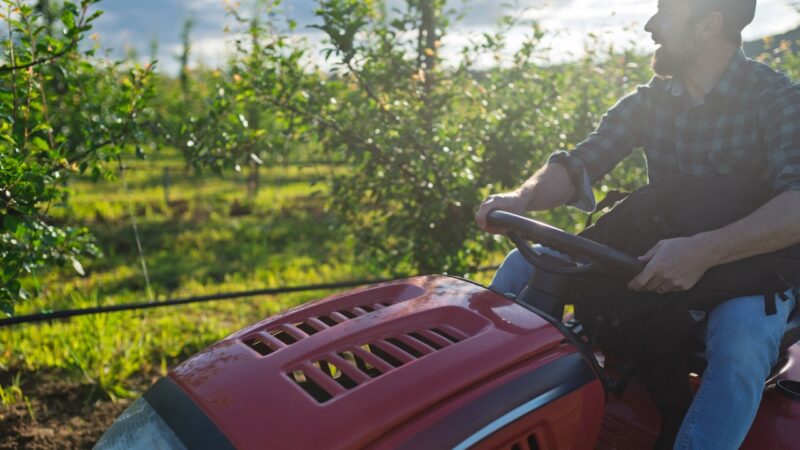
Mechanical Pruning, Hedging, and Vision-Guided Crop Load Decisions
Autonomous Tractors, Smart Sprayers, and Continuous Field Coverage
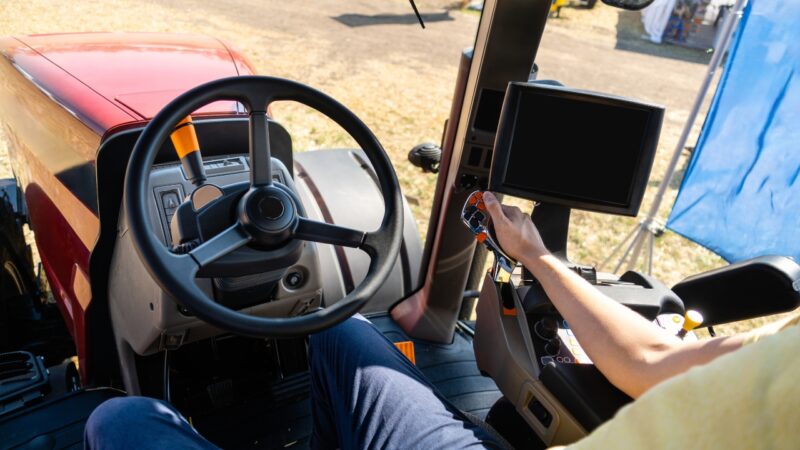
Variable Rate Technology and Data-Managed Orchard Operations
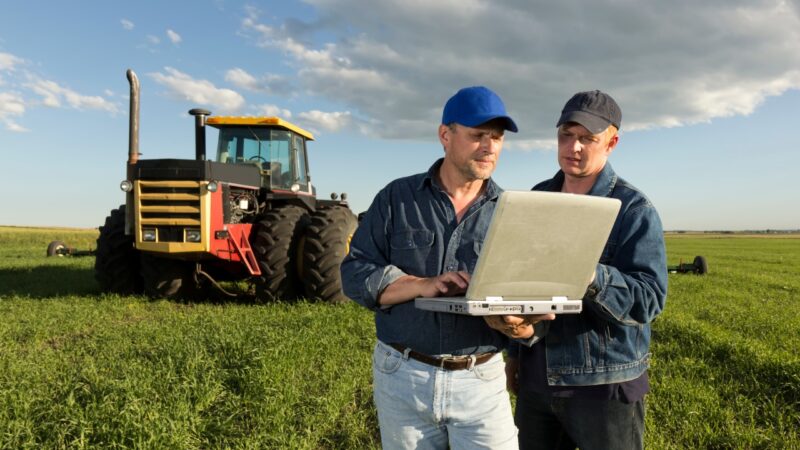
Electric Orchard Tractors and Lower-Emission Operations
This battery-electric tractor is redefining farming with up to 66 kW of power and seven hours of runtime. Ideal for small farms, municipalities and more. Read more here: https://t.co/kmcy9yQqVB#electric #leadersdrivefendt #weareagco pic.twitter.com/vg0IQDNU6MCost, Connectivity, Maintenance, and Crew Buy-In
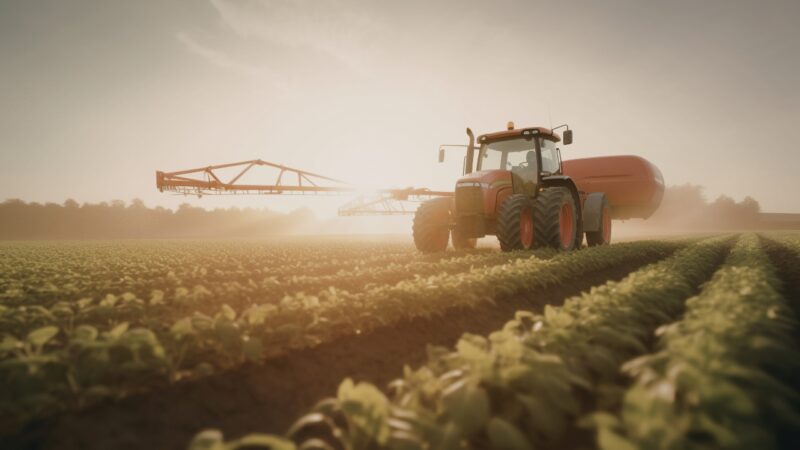
Where Orchard Mechanization Is Growing
Summary