





Choosing a crop based only on selling price can lead to disappointing results.
High revenue per acre does not automatically mean high net profit because labor, seeds, irrigation, equipment, growing time, storage, and buyer access can significantly reduce earnings.
Small family farms often operate at profit margins of roughly 10%, which makes crop selection especially important.
A crop with moderate selling prices and several harvest cycles may sometimes generate better annual returns than an expensive crop harvested only once.
Some specialty crops can generate considerably more revenue per acre than traditional field crops, particularly when growers have established buyers before planting.
Most Profitable Crops Per Acre
Crop
Data
Time to Harvest
Saffron
About $20/g, $5,000 to $10,000/lb, up to roughly $30,000 to $100,000/acre
About 8 weeks
Microgreens
Pea shoots may exceed 60% profit margins
7 to 21 days
Gourmet Mushrooms
About $10 to $20/lb, 15% to 40% margins, some small farms earn $50,000 to $100,000/year
5 to 8 weeks
Gourmet Garlic
About 30% to 50% margins, roughly $30,000 to $60,000/year for some small growers
About 3 months
Herbs
North American market valued at about $1.25 billion in 2023, projected 8.4% annual growth
Multiple harvests possible
Lavender
Global lavender oil market projected to reach about $3.2 billion by 2032
Varies
Profit per acre can vary dramatically depending on crop value, harvest frequency, labor demands, and access to buyers.
Specialty crops often generate more revenue on limited land because they can command premium prices or support several harvests during a year.
Technology can also play a role in improving efficiency, with platforms such as Innova8s helping growers use data and digital tools to manage agricultural production.
Saffron

Saffron ranks among the highest-value agricultural crops discussed in profitability estimates. Extremely high selling prices are possible because only a small amount of saffron is collected during each harvest.
Retail and wholesale pricing can reach at least $20 per gram in certain markets.
An acre may produce at least 3 pounds under suitable growing conditions, creating potential revenue of around $30,000.
Other estimates place saffron much higher. Prices of roughly $5,000 to $10,000 per pound have been reported, with possible gross revenue approaching $100,000 per acre.
Harvest timing also makes saffron attractive to some growers. Crops may become ready for harvest in roughly eight weeks under appropriate conditions.
Labor creates one of its biggest disadvantages. Farms considering saffron need to compare potential selling prices with labor availability and harvesting costs before estimating actual profit.
Microgreens
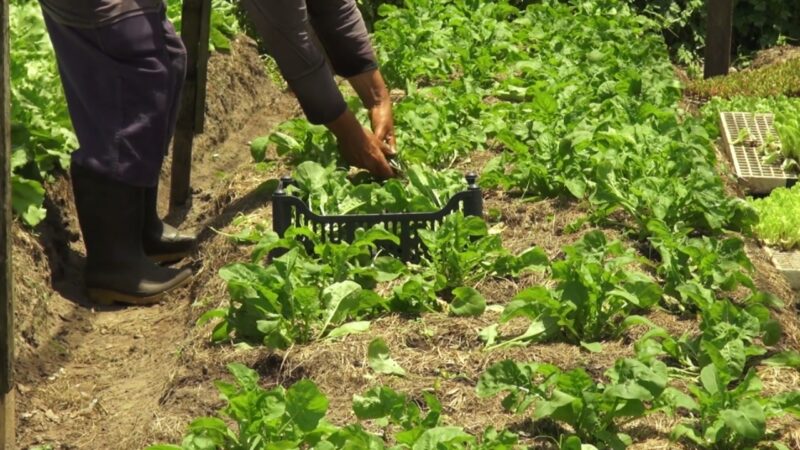
Microgreens can generate high returns using very little space and are among the best crops to grow indoors. Popular choices include arugula, basil, parsley, cilantro, pea shoots, and similar crops harvested shortly after germination.
Fast production cycles are one of their biggest financial advantages. Seed-to-harvest periods commonly fall between 7 and 21 days, with wide varieties ready in roughly two to three weeks.
Rapid harvesting allows growers to complete many production cycles during a year. Vertical growing systems can also increase production per square foot by using stacked growing surfaces rather than relying only on floor space.
Margins can be substantial for certain varieties. Pea shoots, for example, have been associated with profit margins above 60% under favorable production and sales conditions.
Restaurants, specialty grocers, farmers’ markets, and health-focused consumers often provide important sales channels. Reliable customers matter because microgreens have a short shelf life and usually need to reach buyers quickly after harvest.
Gourmet Mushrooms
Gourmet mushrooms offer another option for growers trying to generate significant income in limited space.
Oyster, shiitake, and other specialty mushrooms can be produced indoors, giving farmers more control over temperature, humidity, and production schedules.
Oyster mushrooms may reach harvest in roughly five to eight weeks. Selling prices can fall near $10 to $20 per pound, depending on variety, location, quality, and buyer.
View this post on Instagram
Estimated profit margins for mushroom farming commonly range between 15% and 40%. Some small operations have reported annual earnings around $50,000 to $100,000.
Indoor production can continue throughout much or all of the year, which reduces dependence on outdoor growing seasons. Controlled conditions also allow growers to use shelves and vertical space efficiently.
Startup requirements should still be considered carefully. Reliable humidity control, sanitation, ventilation, substrate preparation, and temperature management can increase operating costs.
Gourmet Garlic
Gourmet garlic combines relatively compact production requirements with strong consumer demand and good storage potential. Proper crop rotation can also help protect garlic crops against soil-borne problems that may reduce yields.
Specialty varieties can command higher prices than standard grocery-store garlic, particularly when marketed directly to chefs, farmers’ market customers, or specialty food retailers.
Some production estimates suggest harvest readiness in around three months, although actual timing depends heavily on variety, planting schedule, and local conditions.
Potential profit margins have been estimated at approximately 30% to 50%. Small-scale growers may generate annual income near $30,000 to $60,000 under favorable production and sales conditions.
Storage life provides another financial advantage. Garlic usually gives growers more flexibility than highly perishable crops because properly cured bulbs can be stored and marketed over a longer period.
Value can also increase through premium varieties, larger bulbs, attractive packaging, direct sales, and established restaurant relationships.
Herbs and Lavender
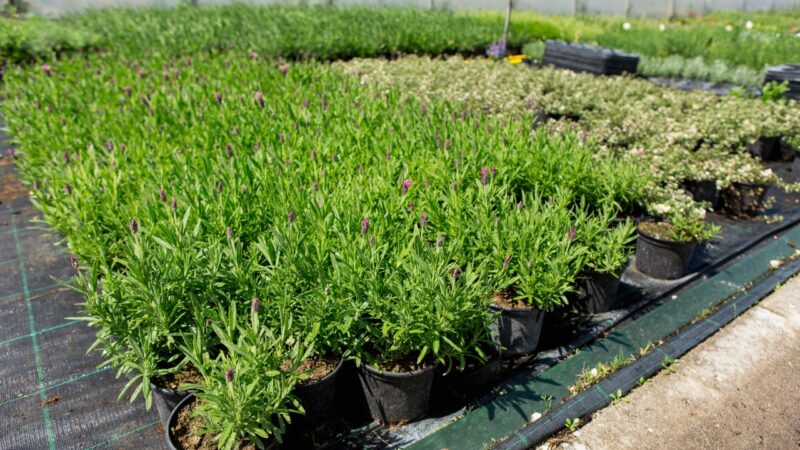
Fresh culinary herbs can produce strong returns because they require relatively little land and may command premium prices.
Basil, mint, parsley, and cilantro are among the most common examples. Many can be harvested repeatedly during a growing cycle, which can increase annual output on a small plot.
Demand also supports commercial production. North America’s fresh herb market was valued at approximately $1.25 billion in 2023, with projected annual growth of 8.4%.
Direct relationships with restaurants can be especially valuable because chefs often need fresh herbs regularly. Farmers’ markets and specialty grocery stores can provide additional sales opportunities.
Lavender follows a somewhat different business model. Fresh flowers can be sold directly, while harvested material can also be processed into oils, cosmetics, aromatherapy products, dried bundles, and related goods.
Global lavender oil sales could reach approximately $3.2 billion by 2032 according to market projections.
Processing can increase revenue potential, although added products require additional equipment, labor, packaging, regulatory compliance, and marketing.
What Determines Crop Profit Per Acre?
Selling price is only one part of crop profitability. Several farms can grow the same crop and achieve very different financial results because expenses, yields, and market access vary considerably.
Local Market Demand and Buyer Access
Finding buyers before planting can reduce one of the biggest risks in specialty agriculture.
Potential customers may include restaurants, grocery stores, farmers’ markets, wholesalers, food processors, and direct-to-consumer buyers.
A high-value crop has limited financial benefit when no nearby customers want it.
Talking with prospective buyers before planting can help growers estimate demand, preferred varieties, expected quantities, delivery schedules, and acceptable prices.
Climate and Soil Conditions
Local growing conditions have a major effect on yield and production costs.
A crop that performs well in one region may require expensive irrigation, greenhouse protection, soil amendments, heating, cooling, or pest control in another.
Soil drainage, pH, rainfall, temperature, frost dates, humidity, and sunlight can all affect productivity.
Matching crops with existing conditions can reduce costs and improve the chances of producing marketable yields.
Crop Production Costs
Gross revenue often looks much more impressive than net profit.
Precision tools such as GPS guidance systems can help reduce some field costs by limiting overlap and unnecessary input use. Labor deserves special attention with crops such as saffron and specialty vegetables. High selling prices can quickly lose their advantage when harvesting, washing, grading, or packing requires many hours of manual work. Mixing Crops Can Increase Your Income…. But Only If You Mix the Right Crops You will sometimes see farmers planting two or three crops together simply because there is still some empty space in the field. But intercropping should not be done randomly. When properly planned, growing compatible crops together can help a farmer use land more efficiently, diversify income, suppress weeds, improve soil cover and reduce the risk of depending on only one crop. But when it is poorly planned, the opposite can happen. Two crops can start competing heavily for sunlight, water, nutrients and space, and instead of increasing income, the farmer may end up reducing the yield of both crops. So before mixing crops, consider a few important things. First, look at the growth habit of each crop. Avoid combining crops that will heavily shade each other. A tall crop can sometimes be combined successfully with a shorter crop, but spacing must allow enough light to reach both. Also consider their rooting systems. Crops that explore different soil depths may compete less than crops whose roots occupy exactly the same zone. The nutrient demand of the crops also matters. Mixing two heavy feeders without enough soil fertility can create strong competition. This is one reason cereals such as maize are often combined with legumes, which can contribute to the cropping system differently from another cereal competing for the same resources. Timing is another important factor. Ask yourself: Will both crops reach their most demanding growth stages at the same time? Sometimes planting dates can be adjusted so one crop establishes earlier or is harvested before competition becomes too strong. Spacing should also be redesigned for the intercrop. Don’t simply use the full recommended population of Crop A and then squeeze the full population of Crop B between the rows. That can overcrowd the field. You should also think about pests and diseases. Avoid combining crops that share serious pests or diseases if the mixture could make management more difficult. And finally, think about harvesting and the market. A good intercrop should make sense not only agronomically but also economically. If one crop makes spraying, weeding or harvesting the other extremely difficult, the additional income may not be worth the extra cost. Intercropping is therefore not simply: “There is empty space here, let me plant another crop.” It is about understanding how different crops interact and designing the field so they complement each other rather than fight for the same resources. The goal is not to put more crops on the land. The goal is to get more value from the land. — AGRONOMME 🇷🇼 (@Agronomme_) August 19, 2026 Multiple harvests can significantly change annual income per acre. Microgreens may complete several cycles during a single month. Culinary herbs can often be cut several times during a season. Tomatoes may produce continuously for months under suitable conditions. Saffron, by comparison, can generate very high value per pound but has a much more limited harvest window. Annual profit calculations should therefore consider total yearly production rather than focusing only on the value of one harvest. Smaller farms often need to earn more money per square foot because they cannot compete with large commodity operations based on scale. Vertical growing, greenhouse production, mushrooms, herbs, and microgreens can help increase output within limited space. Using shelves or stacked production systems allows growers to produce crops on several levels, meaning usable growing area can exceed the building’s floor area. Compact crops can also make direct marketing easier because smaller quantities may be sold to restaurants or local customers at higher prices than bulk wholesale channels typically offer. Saffron has the highest stated per-acre revenue potential among the crops discussed here, although estimates vary considerably. Potential gross revenue ranges from near $30,000 to as much as $100,000 per acre under favorable market conditions. No crop guarantees high profits. Production expenses, climate, available labor, harvest frequency, market access, and reliable customers ultimately determine how much money an acre can produce. Growers who calculate expected net profit instead of focusing only on gross revenue can make much more realistic crop choices.
Harvest Frequency and Annual Yield
Farm Size and Growing Space Efficiency
Summary
