





Equipment failures rarely happen at a convenient time. A hydraulic hose that gives out mid-planting or a worn coupler that snaps during harvest costs more than a repair bill; it costs field days that can’t be recovered.
The slow months between seasons are the best window to catch these problems while there’s still time to order parts, schedule a shop visit, or handle the work without cutting into a planting or harvest timeline.
Why Off-Season Maintenance Matters
Tractors and their attachments take on uneven wear throughout a working season. Hydraulic systems cycle thousands of times, bearings run hot under sustained load, and structural welds absorb repeated stress from lifting and digging. Most of that wear stays invisible until a part fails outright.
A planned inspection during downtime shifts maintenance from reactive to preventive. Farmers who service equipment before the rush avoid the parts shortages and shop backlogs that hit everyone else once the season starts. Preventive work also tends to cost less, since a worn seal caught early is a simple swap, while the same seal ignored can take out a cylinder or pump.
Start With the Tractor Itself
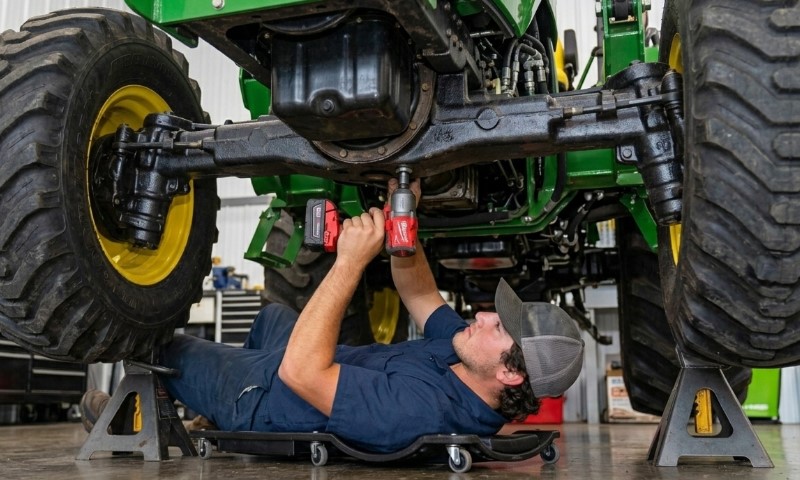
The tractor carries every attachment through the season, so its condition sets the ceiling for everything else. A full inspection should move systematically through the major systems rather than jumping around based on what looks obviously worn.
Engine and Fluid Systems
Oil, coolant, and fuel filters degrade on a schedule regardless of how the tractor was used. Off-season is the time to change engine oil, inspect belts for cracking, and check coolant concentration before freezing temperatures test it.
Fuel systems deserve particular attention if the tractor sat with a partially filled tank, since condensation and algae growth in diesel can clog filters once the engine goes back to regular use.
Battery terminals corrode quietly over months of light use or storage. Cleaning terminals and testing voltage now prevents a dead battery on the first morning equipment needs to move.
Hydraulics and Undercarriage
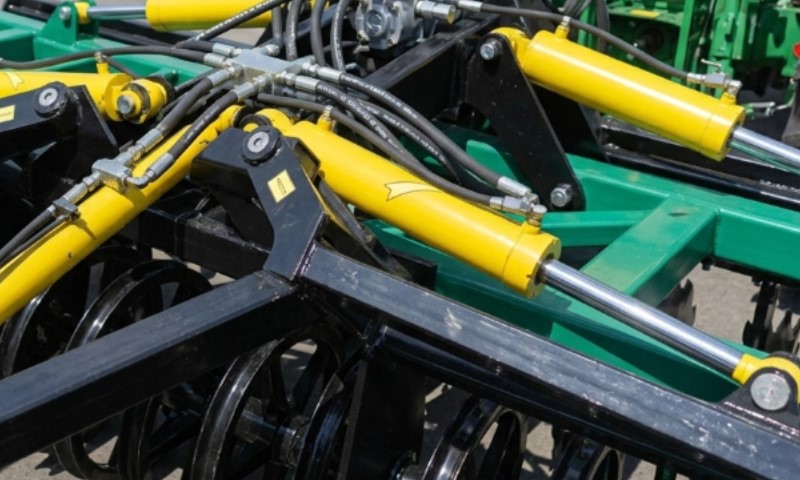
Hydraulic fluid should be checked for contamination and color change, both signs that internal components are wearing faster than expected. Hoses and fittings need a close look for cracking, bulging, or seepage around connection points.
A hose that fails under pressure in the field can spray hot fluid and shut down work for the rest of the day.
On the undercarriage, grease every fitting and inspect pins and bushings for play. Loose connections here translate directly into imprecise attachment control once the tractor is back in the field.
Tires and Structural Points
Tire pressure affects fuel efficiency, traction, and load capacity, so it’s worth checking against the manufacturer’s specification rather than eyeballing it. Sidewalls should be inspected for cracking or bulging, especially on tractors that sat outdoors through temperature swings.
Frame welds and mounting points around the loader arms and three-point hitch also warrant a visual check for stress cracks before they become structural failures.
Inspecting High-Use Attachments
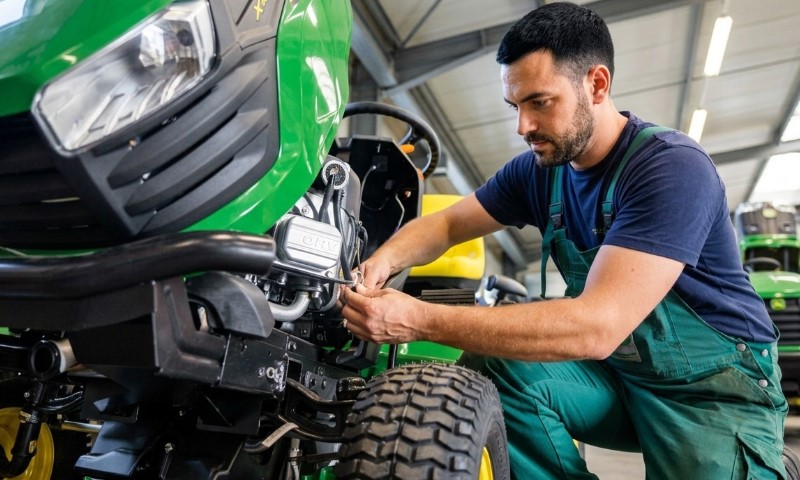
Attachments absorb the direct impact of daily work, often more than the tractor itself. Before the season starts, run a full inspection on high-use implements like buckets, augers, and pallet forks to catch wear before it turns into downtime.
Each attachment type wears differently depending on the job it handles, so a generic once-over misses problems specific to how the tool gets used.
Buckets and Blades
Cutting edges and bucket teeth wear unevenly depending on soil type and how often the attachment scrapes concrete or gravel. Check for thinning metal along the edge and replace teeth that have worn past the manufacturer’s recommended threshold.
Weld seams around the bucket’s mounting brackets should also get a close inspection, since these points carry repeated shock loads.
Augers and PTO-Driven Tools
PTO-driven attachments depend on properly functioning shear pins, universal joints, and gearboxes to run safely. Gearbox oil should be checked and changed if it shows metal particles or discoloration, both signs of internal wear.
Auger flighting takes a beating from rocky soil, so inspect for bent sections or excessive edge wear that would reduce digging efficiency.
Forks and Load-Handling Attachments
Load-handling attachments carry some of the heaviest and most concentrated stress on the tractor, since weight transfers through a narrow contact point rather than spreading across a wide bucket edge.
Tine welds, mounting frames, and locking mechanisms need inspection for cracking or excessive play. A fork with a bent tine or a worn locking pin doesn’t just work less efficiently; it creates a real safety risk when moving pallets of feed, seed, or supplies at height.
Building a Maintenance Schedule That Sticks
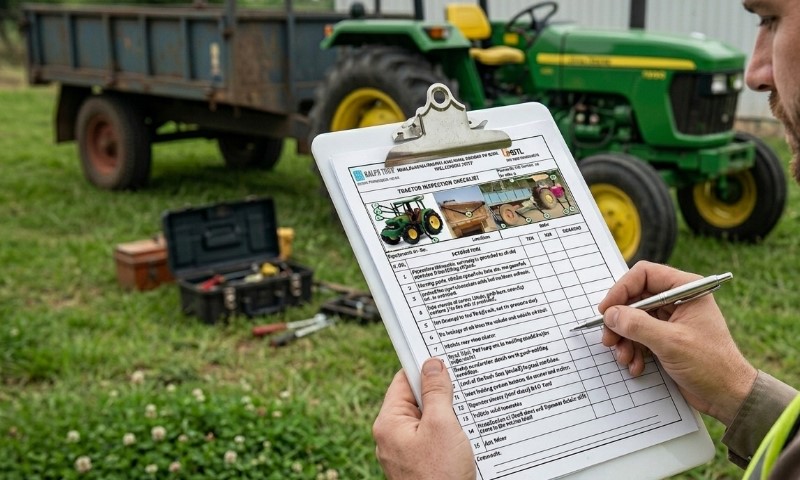
A checklist only works if it gets followed consistently rather than treated as an occasional task. Setting specific windows for inspection makes off-season maintenance a routine part of farm operations rather than something that gets skipped when other priorities come up.
- Schedule inspections at the same point each off-season, tied to a calendar date rather than “whenever there’s time”
- Keep a written log of what was checked, replaced, or flagged for future attention on each piece of equipment
- Order replacement parts for anything showing early wear well ahead of when the part is likely to fail
- Test-run the tractor and each attachment under light load after service, before the season demands full performance
This kind of record-keeping also pays off at resale time, since documented maintenance history supports a stronger asking price on used equipment.
Storage Conditions That Protect Equipment
@homesteadhouseschool DIY Tractor Attachment Storage Solution #farmlife #farmequipment #construction #fencing #diy #farm #farmlife #homesteading #pond #excavator #famer #tractor #johndeere #firewoodprocessor #skidsteer #homesteadhouseschool #aircraft #planes #airplane #fly #pilot #airplanes ♬ original sound – Homestead And Farm – Homestead And Home Farm
How equipment sits during downtime affects how much work the next inspection turns up. Moisture, temperature swings, and pests all contribute to wear that has nothing to do with actual operating hours.
- Store attachments off the ground on blocks or racks to prevent moisture wicking into metal components
- Cover hydraulic cylinders and exposed rod ends to protect against pitting and corrosion
- Keep rodent deterrents near stored equipment, since mice and other pests target wiring insulation and hydraulic hoses
Indoor or covered storage isn’t available on every operation, but even a tarp over exposed hydraulic components extends their working life significantly.
Getting Ready for the Season Ahead
A thorough off-season check turns unpredictable breakdowns into planned maintenance. Farmers who work through the tractor’s core systems, then move attachment by attachment through buckets, augers, and load-handling tools, walk into planting or harvest with equipment that’s ready rather than equipment that’s hoping.
That difference shows up in field days saved and repair bills avoided when it matters most.
