





Put a table and four chairs on the grass for a weekend barbecue, and nothing serious will happen. Leave them there for an entire summer, and you may find yellow patches, muddy chair marks and bare soil where everyone walks.
A garden seating area needs a firm surface, but that does not mean covering half the lawn with concrete. Stepping stones, a small gravel patio or a raised deck can give you somewhere to sit without ruining the surrounding grass.
The choice depends on how many people will use the space, how wet the ground gets and how much of the existing lawn you want to keep.
Why Garden Furniture Can Damage Grass
Grass needs sunlight, air, water and healthy soil to grow. A table left in one place shades the ground, while chair legs press into the soil every time someone sits down.
Repeated footsteps create another problem. When soil becomes compacted, water drains more slowly and grass roots receive less air.
Moving furniture regularly helps with occasional use. For a permanent seating area, however, a separate surface is a better choice.
Choose a Spot Where the Grass Already Struggles
Before digging, walk around the garden and consider where people naturally gather. A sheltered corner near the house may be more comfortable than the middle of an open lawn.
Look for an area that already receives heavy foot traffic or struggles to grow healthy grass. Converting a small worn section into seating can protect the healthier lawn around it.
Check the ground after rain. If puddles remain for hours, you may need to improve drainage before installing anything.
A shaded corner beneath a large tree might look inviting, but digging near major tree roots can damage the tree. Keep construction away from vulnerable root areas and consult an arborist before major excavation beneath mature trees.
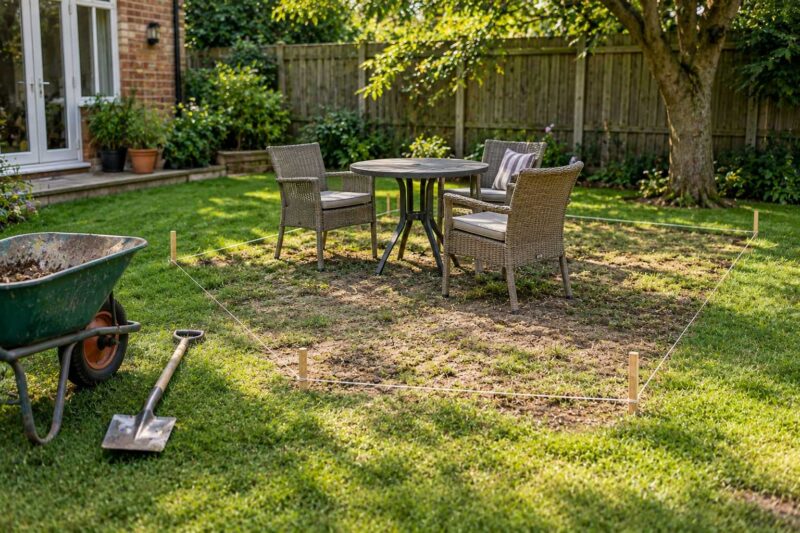
For a simple four-person seating area, start by marking out a space measuring 8 by 8 feet. Place the chairs inside the marked area and check that everyone can sit comfortably.
Leave enough space behind chairs to stand up without stepping onto the grass.
Use Stepping Stones for a Small Seating Area
If you only need room for two chairs and a small table, stepping stones may be enough.
Large, flat paving stones provide firm places for furniture legs without requiring a full patio. Choose stones with a suitable outdoor slip-resistant finish.
Mark the position of each stone before removing the turf beneath it. Install the stones on a properly prepared, compacted base so they remain stable and level.
For a more finished appearance, set the stones close to the surrounding lawn height. Raised edges can catch a mower blade or become a trip hazard.
Keep the gaps large enough for grass to grow if you want a green appearance, but remember that shaded grass beneath furniture may still deteriorate.
Stepping stones work best for occasional seating. Dining chairs that move frequently need a more continuous surface.
A Small Gravel Patio Is an Affordable Alternative
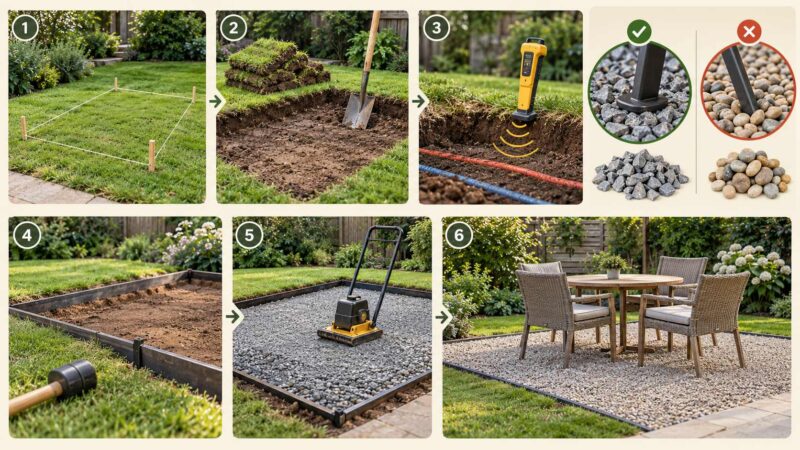
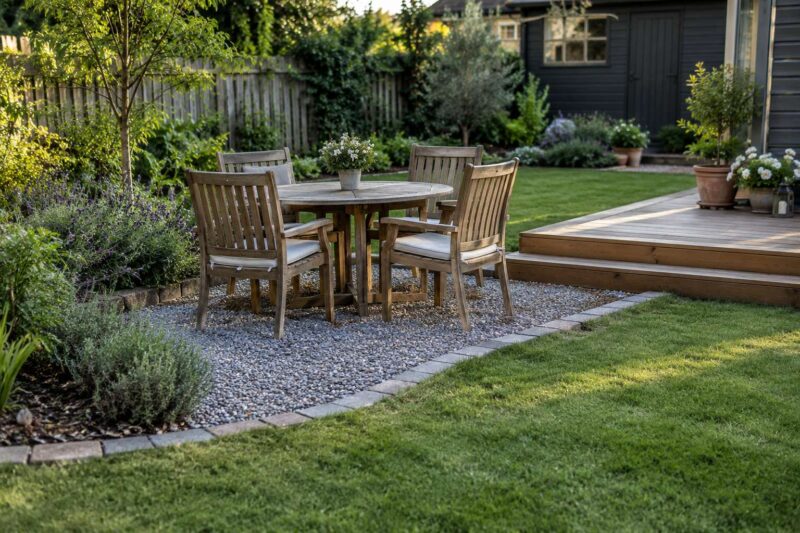
Gravel works well for a garden seating area when you want a defined surface without installing expensive paving.
Pea gravel looks attractive, but its rounded stones move under chair legs. Angular gravel or compacted crushed stone generally provides a firmer base for furniture.
- Mark the chosen area using string and stakes.
- Remove the grass and topsoil to the depth required for the selected base and gravel.
- Check for underground utilities before digging.
- Install suitable edging to keep the gravel from spreading onto the lawn.
- Prepare and compact the base according to ground conditions.
- Add the gravel and level the surface.
Choose edging that keeps loose stones away from the lawn mower. Metal, timber and suitable landscape edging can all work, provided they are installed securely.
For outdoor dining, use furniture with wide feet or a stable base. Narrow chair legs can sink into loose gravel.
Gravel is also useful for reclaiming an overgrown garden, where clearly marked seating areas and paths help keep the surrounding planting organised.
Build a Raised Deck Without Covering the Whole Garden
A small deck can provide a level dining surface on ground that slopes slightly or becomes muddy after rain.
Unlike a paved patio, a raised deck needs a supporting frame and correctly designed foundations. The load from furniture, people and other equipment must be transferred safely to the ground.
Timber remains a common choice, although composite decking is another option for homeowners who want boards that do not require regular staining or painting.
Keep the deck compact. A platform just large enough for a table and chairs will preserve more lawn than a large structure extending across the garden.
Do not place a heavy deck directly on living turf. The grass underneath will lose sunlight and eventually die, and the structure needs proper support regardless of the surface covering.
Check local requirements before construction, particularly for raised decks. Height, foundations, railings and proximity to property boundaries can affect the design.
Protect the Grass During Construction
Even a small garden project can damage more lawn than the finished seating area occupies.
Wheelbarrows, piles of gravel and repeated trips across wet grass can compact the soil. Heavy materials left on the lawn may also kill the grass underneath.
Choose one route between the delivery point and the construction area. Where repeated access is unavoidable, use suitable temporary ground protection to spread the load.
The University of Delaware advises limiting construction traffic and using protective paths to reduce soil compaction.
Keep materials on an existing driveway or another suitable hard surface whenever possible.
Wait until the ground is reasonably dry before moving heavy loads. Wet soil is more vulnerable to damage, and muddy wheelbarrow tracks can remain visible long after the project is finished.
Add a Path So People Stop Walking Across the Lawn
A seating area at the far end of the garden may look attractive, but everyone will take the shortest route to reach it.
After months of use, that route can become a worn strip through otherwise healthy grass.
Stepping stones provide an easy solution. Place them along the route people already use rather than creating an awkward curve that nobody will follow.
For comfortable walking, test the spacing before fixing the stones in place. People should be able to walk naturally without stretching their stride.
A narrow gravel or paved path is another possibility, particularly if guests regularly carry food and drinks.
The Clemson Cooperative Extension recommends using suitable pathways to reduce repeated traffic and protect lawn areas vulnerable to compaction.
Keep Water Away From the Seating Area
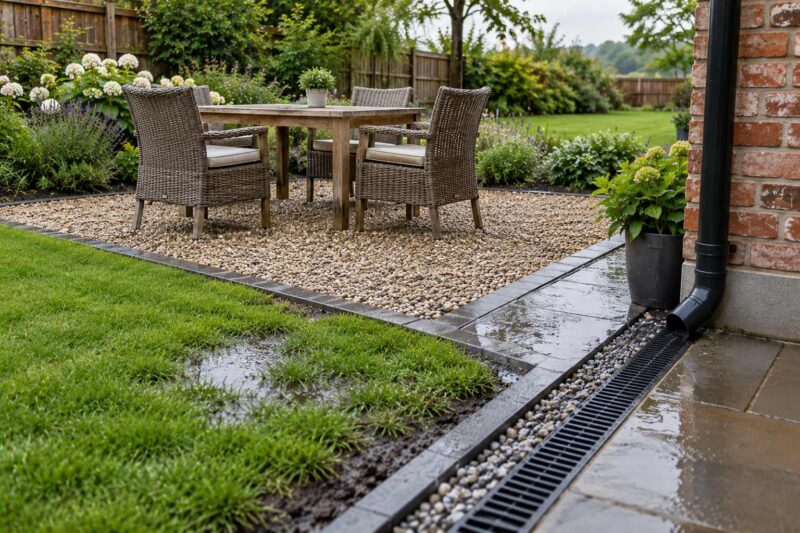
A garden patio that collects water after every rainfall quickly becomes unpleasant to use.
Before construction, watch where rainwater travels. Water flowing from a downspout or a higher section of the garden may need a suitable drainage route.
Patios and paved areas should have an appropriate fall so water moves away from buildings rather than collecting beside foundations.
For gravel areas, the base and surrounding soil must allow water to drain adequately. Simply adding gravel over waterlogged ground will not solve a serious drainage problem.
Raised decking also needs enough clearance and ventilation beneath the boards, according to the decking system instructions.
Avoid directing runoff into a neighboring property or towards areas already suffering from erosion.
Keep Furniture Off the Grass Around the Seating Area
Even after building a patio, furniture can damage the lawn if chairs extend beyond the edges.
Choose a table that fits the surface with room to pull the chairs out. For a four-person dining table, an 8-by-8-foot patio may be tight depending on the furniture dimensions. Measure the chairs in their occupied positions before settling on the final size.
Benches can save space because they do not need to move as far as individual dining chairs.
Place planters on the seating surface instead of directly on the lawn. Large containers left in one place block light and can leave bare patches.
For a small garden, two comfortable chairs and a compact table may be more useful than an oversized dining set.
How to Repair Grass Damaged During the Project
Once construction is finished, inspect the grass around the new seating area.
Flattened grass may recover when traffic stops. Bare patches and compacted soil need more attention.
Remove construction debris and loosen compacted areas using an appropriate lawn aeration method. For established lawns, hollow-tine aeration helps create openings for air and water without simply pressing more soil aside.
Reseed bare areas during the suitable growing season for your grass type. Cool-season lawns generally establish best during cooler growing conditions, while warm-season varieties have different planting windows.
Choose grass seed suited to the amount of sunlight the area receives. In deep shade, additional seed alone may not solve the problem.
Low-growing ground cover plants can also replace grass in planting areas where regular mowing is inconvenient, provided the species suits the local climate.
@walledgardener.as Lawn destroyed… now to fix it! 😂 First things first, give the mower deck a bloody good clean. At this time of year, with damp dewy mornings and all the dirt from scarifying, it can get in a right mess. Then seed it. Then roll it. I’m just using the mower as a roller here — the blades aren’t engaged. I don’t want to suck up all the seed, I just want to press it into the surface to make sure we get good contact with the soil. Then fertilise it. And finally… pray for rain. 🙏 By some absolute miracle, it started raining the second I finished. Freaky. 😂 Then just sit back, relax and watch it grow. All jokes aside, try to keep off it for a few weeks and give the new seed a chance to get established. #LawnCare #Scarifying #GrassSeed #Gardening #lawnrepair ♬ original sound – walledgardener Ashley
Which Garden Seating Surface Should You Choose?
| Surface | Best Use | Main Consideration |
| Stepping stones | Two chairs and occasional seating | Furniture needs stable support |
| Gravel patio | Budget seating areas | Needs edging and a properly prepared base |
| Paved patio | Regular outdoor dining | Requires excavation and drainage planning |
| Raised deck | Sloping ground and defined seating spaces | Needs a suitable supporting structure |
For a small garden, I would start with the simplest surface that supports the furniture safely. Stepping stones suit occasional use, while a compact gravel or paved area is more comfortable for regular dining.
A raised deck is worth considering when the ground makes an ordinary patio difficult to build.
Keep the Lawn Healthy Around Your New Seating Area
After the seating area is finished, keep heavy furniture and regular foot traffic off the remaining grass.
Mow around the edges carefully and maintain a clear border between the lawn and the new surface. If gravel or mulch spreads onto the grass, remove it before mowing.
Grass beside a deck or privacy screen may receive less sunlight than it did before construction. Monitor those areas and adjust planting if the turf begins to thin.
A garden seating area does not need to occupy the entire lawn. A small, stable surface, a clear path and enough room for chairs will give you somewhere comfortable to sit while leaving most of the garden green.